A 32-Year-Old Bug Just Got Weaponized: Why Legacy Code Is Your Biggest Compliance Blind Spot
By SecurePoint USA Intelligence Team·
Time to Exploit
< 20 Hours
Vulnerability Age
32 Years
This week, researchers disclosed CVE-2026-32746, a pre-authentication remote code execution vulnerability hiding in GNU Telnetd for exactly 32 years. It affects GNU Inetutils telnetd through version 2.7, including Debian's packages and the embedded devices and appliances that still ship it.
Meanwhile, a separate zero-day in Langflow AI pipeline servers was weaponized within 20 hours of its disclosure online.
The gap between "vulnerability discovered" and "actively exploited" hasn't just shrunk. It has collapsed to hours, not months. There is no grace period.
The Skeletons in the Compliance Closet
Connect these real events to the compliance screening world. Many organizations pursuing CMMC Level 2, ITAR compliance, or OFAC sanctions screening are sitting on legacy visitor management systems, aging middleware, and unpatched infrastructure, often without knowing it.
These are the same organizations trusting decades-old code to collect, process, and protect highly sensitive visitor data, including foreign national passports and defense supply chain logistics.
Federal Systems Are Taking Heavy Fire
CISA just gave federal agencies until SUNDAY to patch Cisco FMC (CVE-2026-20131) directly due to the Interlock ransomware group already exploiting it as a zero-day. If the federal sector is struggling to stay ahead of week-old patches, what chances does a mid-market defense contractor have running a locally hosted badge-printing tool built in 2016?
Age Equals Risk in Visitor Management
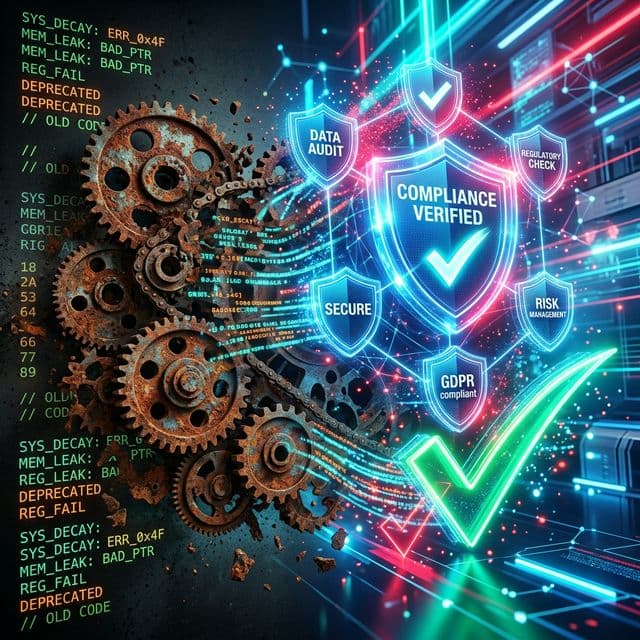
If your visitor check-in system was deployed 5 to 10 years ago, what's lurking in its dependencies? When a vendor sells you a physical iPad kiosk system and walks away, the software inside it begins rusting the moment they leave the building.
Every unpatched library, every outdated OS layer, and every deprecated API call is an open window for threat actors to pivot into your core infrastructure. The very system meant to keep unauthorized people out of your building becomes the vector that lets them into your network.
The Real-Time Trap
OFAC just dropped new counter-terrorism designations TODAY (March 20, 2026). Sanctions lists change often, and a screening tool can only catch a new designation after it refreshes the list that carries it. How often that happens varies by vendor and by list.
The real risk here is simple: Compliance isn't just about checking boxes anymore. It's about whether your infrastructure can survive the threat landscape of 2026. If you allow a restricted foreign national into your ITAR-secured facility because your screening data was out of date, the compliance obligation is still yours, not your vendor's.
What You Can Do Today
Don't wait for a 32-year zero-day to force your hand. Start mitigating the risk of your compliance infrastructure right now:
1
Audit Your Current Stack
Identify exactly how old your visitor management and screening software is. Cross-reference the underlying operating system and libraries against known vulnerability databases.
2
Ask About List Freshness
Ask your screening vendor how often it refreshes OFAC, BIS, and other restricted-party lists, and how quickly a new designation reaches your screening results.
3
Shift to Cloud-Native Solutions
Modernize by moving away from on-premise hardware appliances that require manual patching. Prefer hosted platforms where the vendor applies security updates centrally, and ask how any components installed on your own devices, such as kiosk apps or badge-printing tools, receive updates.
You Can't Protect 2026 Data with 2016 Code
SecurePoint USA is built from the ground up to counteract this exact paradigm. It supports CMMC, ITAR, and OFAC compliance programs with restricted-party screening at check-in and a cloud-native architecture, not legacy code hiding 32-year-old skeletons.